

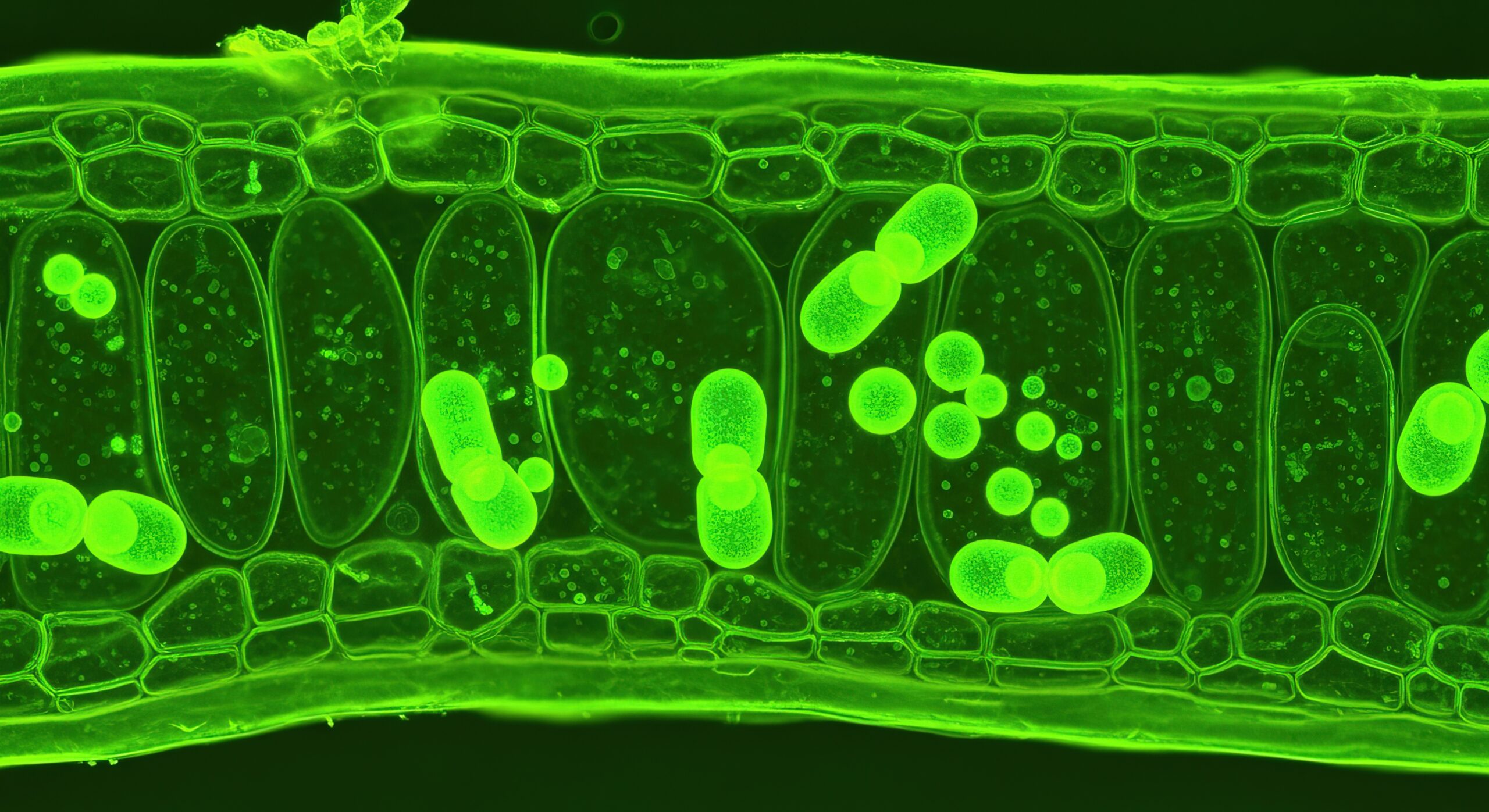


One of the major tools researchers use to study molecules and cells is GFP, otherwise known as the green fluorescent protein. Many types of fluorescent proteins are used to monitor conditions inside cells, track how proteins interact, and even measure how long those interactions last. This all relies on environmental sensitivity, which is where their quantum properties come into play, such as magnetic sensitivity. By monitoring the orientation and magnetic spin of fluorescent proteins, we can detect changes in the magnetic fields within the body. For example, neurons firing or ion flows can affect magnetic fields, which in turn impacts the proteins. On the flip side, using these proteins as quantum sensors means we can effectively switch them on and off for applications in drug therapies or imaging.
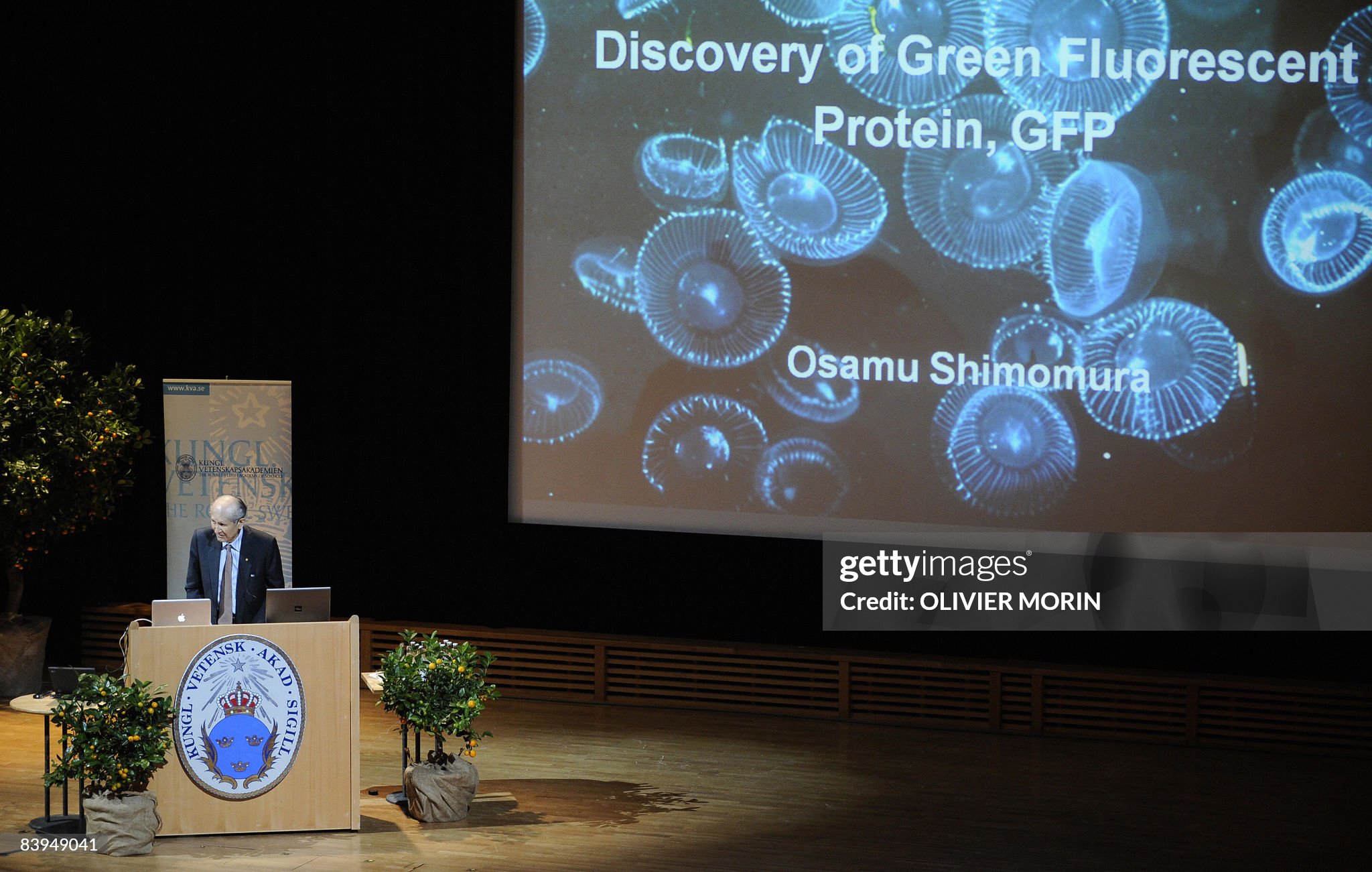
On the joint Nobel prize winners in Chemistry
Image Source: OLIVIER MORIN
To understand how this works, we have to go back to the physics. Quantum computing and sensing both depend on qubits, the fundamental units of quantum information. In computing, qubits must remain isolated from the external environment. On the other hand, quantum sensing depends on interactions between qubits and their environment, which are then measured. This is the primary concept behind Magnetic Resonance Imaging (MRI). Current research uses an NV diamond center, in which a diamond crystal contains a nitrogen and vacancy defect formed by removing two carbons. The spins of electrons can be controlled using lasers, magnetic fields, and temperature, so the electrons occupy specific states, causing them to emit light at predictable wavelengths. These quantum sensors also have an advantage over their computing counterparts: they can operate at room temperature.
Of course, like their computing counterparts, applying these systems to biology remains difficult. But progress has been made. For example, researchers are using NV diamonds to perform nanoscale MRIs and even bind the diamonds to molecules in blood plasma samples to detect HIV. Nevertheless, NV diamonds are still too large to function effectively inside cells. Fluorescent proteins, in contrast, perform the same role on the appropriate scale and are far less invasive when introduced via genetic engineering.
Quantum Computing Logistics, Quantum Physics, Quantum mechanics – stock photo
Image Source: Just_Super
The precursor to this breakthrough was determining that molecules could in fact act as qubits at all. Researchers used enhanced yellow fluorescent protein (EYFP) because its electron energy structure resembles that of qubits. The genetic code can be modified so when a target protein is expressed, fluorescence occurs too. In some cases, there is a nonfluorescent triplet state, causing the protein to temporarily dim. This can be used to create the superposition of spins we desire. Achieving this superposition state simply requires shining lasers at the appropriate frequencies. However, shining light also degrades fluorescent proteins, so researchers are now working to improve both the sensitivity and durability.
For now, fluorescent proteins still have limitations to overcome before they can be applied as functional quantum sensors, much less used reliably within the human body. However, the future of so-called magnetogenetics appears increasingly promising, and it may not be long before we can engineer a biological, or “wet,” MRI like system using these proteins.
Featured Image Source: n0M3rCy